
The Heel Prick Matrix
Newborn screening options now vary by orders of magnitude from state to state, and most parents have no idea what that means, including what happens to the data it creates.

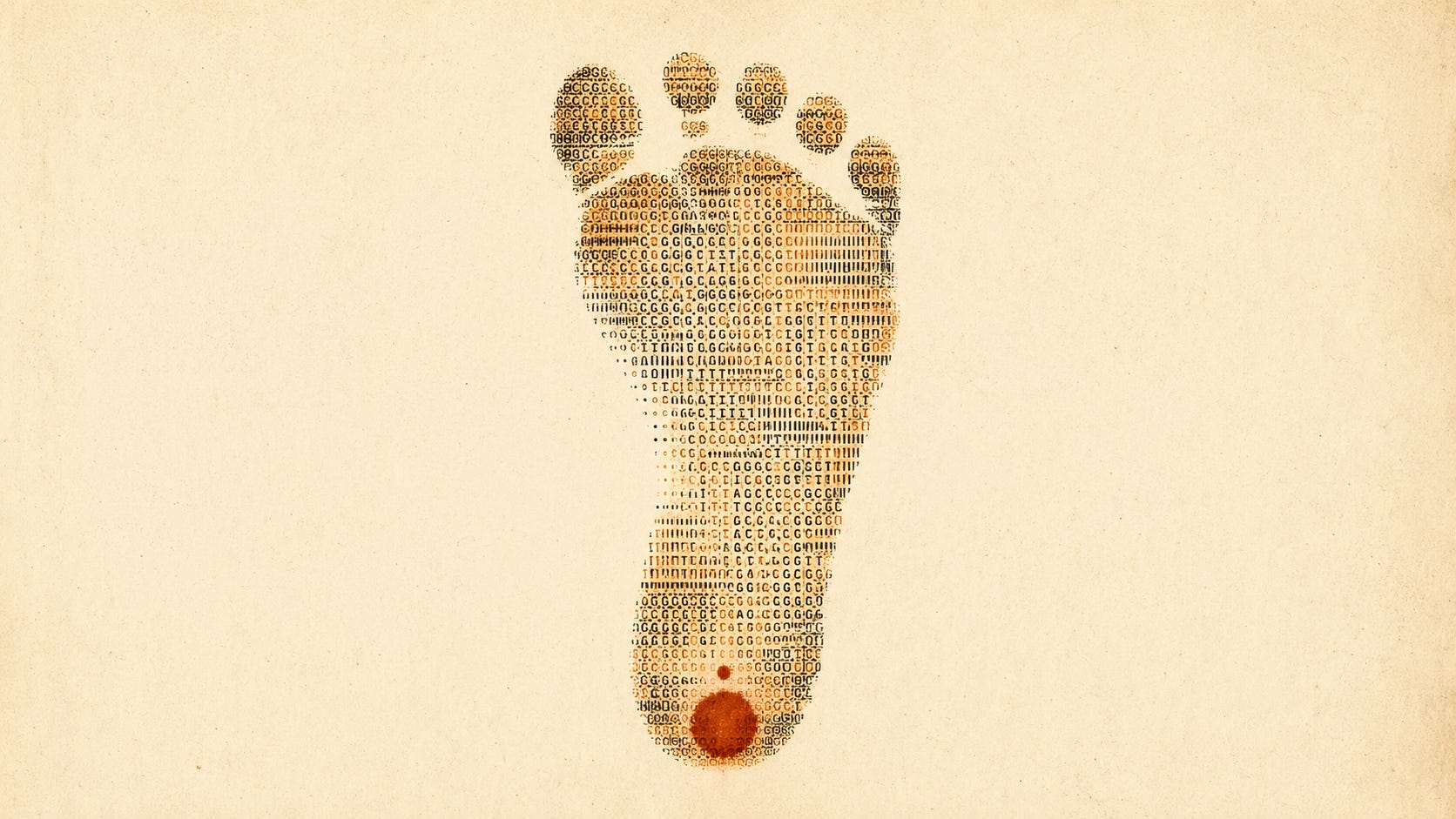
Two babies born the same day, a few miles apart on opposite sides of a state line, do not get the same test at birth. One is screened for a few dozen genetic conditions. The other, depending on the hospital, can have its whole genome sequenced and read against nearly 900 conditions. Both are called newborn screening, and most parents have no idea the difference exists.
For about sixty years, newborn screening meant one fairly stable thing. A day or two after birth, a baby’s heel is pricked, a few drops of blood go to a state lab, and the lab checks for serious conditions that share one trait: caught early each can be treated, and missed each does lasting harm. It started in 1963, when Massachusetts became the first state to require testing every newborn for PKU, a disorder that causes permanent brain damage untreated and is managed with diet if caught in time. The list grew to a few dozen conditions over the decades, but it was always the same kind of test, built to catch the treatable ones early. Most parents never think about it.
This month, three separate programs changed what newborn screening can mean. A service in South Korea began reading 595 genetic conditions from a single newborn sample. Florida is rolling out free whole-genome sequencing this summer to babies born through Tampa General, aiming to take the state from around 60 conditions to nearly 900. Texas added one disorder, GAMT deficiency, to its standard panel. Three very different scales, all still called newborn screening.
A few dozen conditions and a whole genome are not the same test. A panel checks a fixed list and, when it finds nothing, tells you almost nothing else. A whole genome captures everything, and scientists are still learning what most of it means. More than a billion human genetic variants have been catalogued, and the hard part was never finding them, it is knowing which ones matter. In testing today, as many as half come back uncertain, found but unexplained. AI is speeding up the finding faster than the explaining, so a genome read on day one will be reread for decades as the science of what it means keeps changing. What a test says about a baby this year is not what it will say thirty years later.
For now, these whole-genome programs are voluntary, something a parent opts into. The ordinary panel is the opposite: in almost every state it runs automatically, mandatory or opt-out, often without formal consent, because the conditions it catches are few and treatable. The real change is not the count of conditions but that a whole genome is a permanent record of a person, created on the first day of life. A choice made once, by a parent, for a newborn, reaches forward into that grown adult’s relationship with their own genome, and into a file that outlives the people who agreed to it. The open question is what happens when the genome version slides into the same automatic slot the short panel has held for sixty years.
Sixteen years ago I had my daughter at NewYork-Presbyterian, on the Upper East Side. I have no memory of the heel prick, though it must have happened. Recovering from a C-section, I took the test on faith, like everything else in those first days, assuming it sat inside a framework that responsible experts and lawmakers had already worked through. The version I trusted checked a few dozen conditions. The version arriving now reads the whole genome.
What I trusted as one settled thing was never one thing. The list is set state by state. A federal panel recommends a common core, but it is guidance, not law, and states add to it or lag behind on their own schedules. Parents are told, in the technical sense, in a pamphlet or a line on a form, but being told is not the same as being aware, least of all two days after giving birth. And the difference now is not only which conditions are checked, but whether the test reads a short list or the whole genome, under the same two words.
None of this needs bad faith or anyone harvesting infant DNA. It is what happens when the work outpaces the language built to govern it. A whole-genome program inherits the trust a few dozen treatable conditions spent sixty years earning, because both arrive under the same familiar phrase, and the phrase does not tell a test you act on this year apart from a record that follows a person for life.
The United States is not first or alone, other countries, including England through its national health system, are running their own newborn sequencing programs. And the protections meant to cover this were written for the smaller test. GINA, the main federal law, stops health insurers and employers from using your genetic information against you, but it does not reach life, disability, or long-term-care insurance, and it says almost nothing about what happens to a genome once it is stored.
The precedent already exists. When 23andMe filed for bankruptcy last year, the genetic data of about fifteen million people became an asset for sale, and a court allowed it. Most of these newborn programs are run by private companies too, and a baby’s genome sits on their books the same way. No federal law has closed that gap. A few states have passed their own protections, Florida among them, the same state now offering newborns a whole-genome sequence.
The harder question is not whether to sequence newborns, which was settled this month while almost no one noticed. It is who holds the file when the baby turns eighteen and asks what is in it, whether anyone can correct it as the science shifts, and whether there is any way to opt out of a decision made before you could speak. The record arrives first, and the way to live with it has not been built. It is one instance of a wider pattern. The science moves, the capability ships, the words meant to govern it stay where they were, and the gap does not stay empty. A genome the rules ignore is a genome someone else gets to use. The heel prick looks exactly as it always has. What it returns is now an asset in a market the family was never told they entered.